
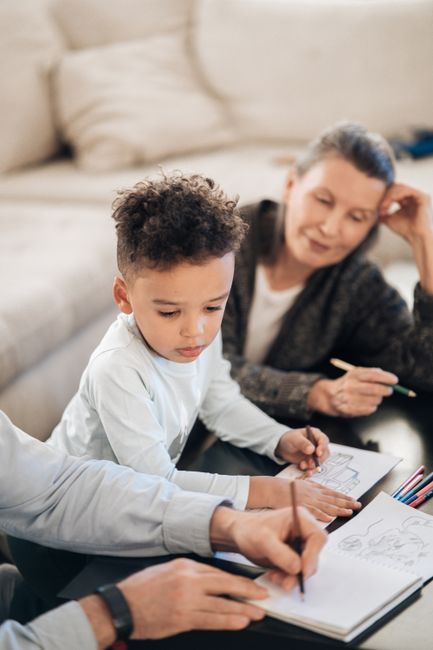
Intergenerational activities bring older adults and younger people together for shared conversation, learning, creativity, and recreation. In assisted living, these interactions can support emotional well-being, cognitive engagement, physical activity, and a stronger sense of connection to the surrounding community.
For residents and families in Baldwin, PA, intergenerational programming may include visits with school-age children, family activity days, partnerships with youth groups, or informal gatherings involving several generations. The most successful activities are planned around comfort, accessibility, mutual respect, and genuine shared interests.
What are intergenerational activities?
Intergenerational activities are organized or informal experiences that involve people from different age groups. In assisted living, they may connect older adults with children, teenagers, young adults, or families.
Examples include:
- Reading together
- Making seasonal crafts
- Sharing music or storytelling
- Gardening in raised planters
- Playing board games or adapted recreational games
- Preparing simple recipes
- Discussing local history and family traditions
- Working on art, writing, or technology projects
- Celebrating birthdays, holidays, or community events
These activities are different from one-sided entertainment. The goal is participation and exchange, not simply having younger visitors perform for older adults. Residents should have opportunities to teach, make choices, ask questions, and contribute their own knowledge.
How can these activities benefit older adults?
Intergenerational activities can reduce feelings of isolation and create meaningful opportunities for residents to feel useful, remembered, and socially involved. Regular interaction may also add variety to daily routines.
A resident who helps a child practice reading, explains an old-fashioned household task, or shares memories of earlier community life may experience a stronger sense of purpose. Younger participants often benefit from the same exchange by gaining patience, listening skills, historical perspective, and comfort communicating across age differences.
Potential benefits for older adults include:
- More frequent social interaction
- Improved mood and reduced loneliness
- Opportunities to recall and share memories
- Stimulation through conversation and problem-solving
- Encouragement to participate in creative or physical activities
- Greater connection with family and the broader community
- A renewed sense of identity beyond the role of “resident”
The benefits are not automatic. An activity that is too loud, rushed, physically demanding, or unfamiliar may cause stress instead of enjoyment. Planning should account for hearing changes, vision needs, mobility limitations, dementia-related symptoms, and individual preferences.
Can intergenerational programs support cognitive health?
They can provide useful mental stimulation, although they should not be described as a treatment or cure for dementia or other medical conditions. Conversation, storytelling, games, music, and hands-on projects may encourage attention, language use, memory recall, and flexible thinking.
Activities are often most effective when they connect with familiar experiences. For example, a resident may enjoy showing a child how to fold a simple paper craft, describing a favorite type of music, or comparing school routines from different generations.
People living with memory loss may participate successfully when the activity is:
- Short enough to avoid fatigue
- Repetitive and easy to follow
- Supported by visual cues or demonstrations
- Conducted in a calm, familiar setting
- Focused on enjoyment rather than performance
- Adapted to the resident’s current abilities
There is no need to test memory or correct every detail. A respectful conversation can remain meaningful even when a resident recalls events imperfectly.
What activities work well in assisted living?
The best choices are flexible, low-pressure, and easy to adapt. Activities should allow residents to participate while seated, standing, observing, or assisting others.
Shared storytelling
Residents can describe childhood games, household traditions, seasonal celebrations, or memorable changes in Baldwin over the years. Younger participants can ask prepared questions or share their own experiences. A facilitator should make sure the discussion does not become an interrogation or require residents to discuss painful memories.
Music and rhythm
Singing familiar songs, listening to different musical styles, using simple percussion instruments, or comparing favorite performers can encourage participation across age groups. Music is especially useful because people can join by listening, clapping, humming, or moving gently.
Reading and writing
Children and older adults can read short stories, poems, newspaper features, or personal letters together. Residents who do not want to read aloud may help choose a story, discuss its meaning, or illustrate a scene.
Gardening and nature activities
Container gardening, seed sorting, observing birds, or arranging flowers can support conversation and light movement. Raised beds, stable seating, clear walkways, and seasonal planning are important in a community where cold weather, snow, and icy outdoor conditions can limit access during parts of the year.
Art and practical projects
Painting, decorating cards, making simple quilts, assembling memory books, or creating seasonal displays can give each participant a role. Projects should avoid tiny pieces or sharp tools when safety is a concern.
Technology exchanges
Younger participants may help residents use tablets, video calls, digital photo frames, or basic accessibility features. Residents can respond by sharing life experience, advice, stories, or traditional skills. The exchange works best when neither age group is treated as automatically knowledgeable about everything.
How should activities be adapted for safety and comfort?
Safety planning should cover the physical setting, the pace of the activity, supervision, infection control, and emergency procedures. Children and visitors need clear expectations about walking, noise, personal space, and respectful communication.
Helpful measures include:
- Providing stable chairs with arms and clear pathways
- Keeping group sizes manageable
- Offering quiet areas for residents who become overwhelmed
- Avoiding clutter, loose cords, and slippery surfaces
- Using large-print instructions and easy-to-hold materials
- Scheduling activities when residents are usually alert
- Allowing residents to leave or observe without pressure
- Following current health and visitation policies
- Making sure activities do not interfere with medication, meals, rest, or personal care
Physical contact should never be assumed. Hugs, hand-holding, and lap-sitting require individual consent and appropriate boundaries. Staff or family members should also watch for signs of fatigue, distress, confusion, or overstimulation.
What are common misconceptions?
One misconception is that intergenerational activities are mainly for children’s benefit. In reality, the exchange should respect older adults as active contributors rather than passive audiences.
Another misconception is that every resident will enjoy the same type of interaction. Some people prefer small groups, while others enjoy larger gatherings. Some residents may connect best with teenagers, adults, or very young children. Personal history, culture, personality, and health all shape preferences.
It is also mistaken to assume that a successful event must be elaborate. A quiet conversation, a short card-making session, or a resident teaching a visitor how to play a familiar game may be more meaningful than a large performance.
How can families support intergenerational connections?
Families can help by sharing information about a resident’s interests, favorite songs, former occupations, hobbies, and comfort level with children or groups. Bringing photographs, recipe cards, craft materials, or familiar objects may provide useful conversation starters.
Family members should avoid presenting participation as an obligation. A resident may enjoy watching rather than joining, or may prefer one visitor at a time instead of a crowded event. Respecting those choices helps keep the experience positive.
For area households, intergenerational activities can be especially valuable when winter weather, transportation challenges, or changing family schedules make regular visits difficult. Consistent, modest contact often matters more than occasional large gatherings.
